
Results with Qelbree

Qelbree pediatric medical study results.

Decorative
Components

Qelbree was proven to significantly reduce ADHD symptoms in children and teens in 3 medical studies

Feature List Description
In medical studies, Qelbree—a non-stimulant—was proven to help effectively manage ADHD symptoms compared to placebo at the end of the studies.
Feature List Items
Feature List Item Icon

Qelbree met the goal of 3 different medical studies: a significant reduction in ADHD symptom scores in 6 or 8 weeks, depending on the study. For some children, Qelbree reduced ADHD symptom scores as early as Week 1.

Feature List Item Icon

Your child’s healthcare provider can recommend Qelbree as part of a total treatment program that may include counseling and support therapies.

Speedbump Icon

Rapid and extended release and full-day coverage

Speedbump Description
Qelbree uses 2-bead Microtrol® Technology for rapid and extended release and provides medication coverage throughout the day.

Medical study results

Feature List Description

How we ran the studies: Qelbree was studied in 3 medical studies involving boys and girls ages 6-17 years who had been diagnosed with ADHD. The studies measured what kind of changes in ADHD symptoms these children experienced over the course of the 6- or 8-week medical studies. They measured the frequency and severity of ADHD symptoms, including inattention, hyperactivity, and impulsivity.

Qelbree showed significant reduction in symptoms compared to placebo

Feature List Items
Feature List Item Icon
Feature List Item Description

Qelbree was proven to be effective and safe* in 3 medical studies in over 800 patients with a once-a-day convenient dose.
Feature List Footnote
*Important: Those taking Qelbree should be monitored for mood or behavior changes. The healthcare provider should also monitor for changes in blood pressure and heart rate.
Fifty Fifty Left
Media Block Image
Fifty Fifty Right

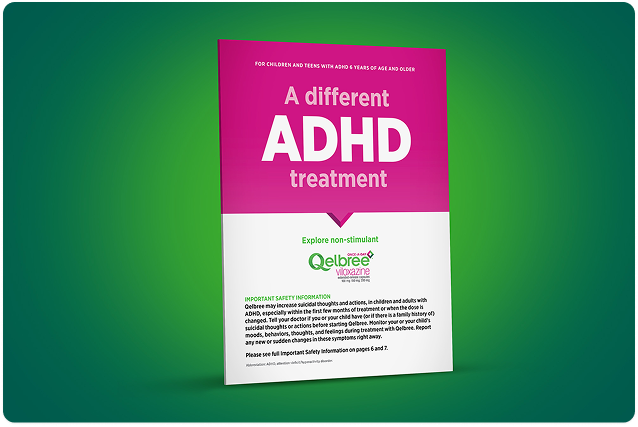
Download the Qelbree brochure

Content Block Description

It’s an easy-to-reference source for:

  • Key treatment information on Qelbree
  • Helpful tips for managing your child's ADHD
Content Block CTA Button
Fifty Fifty Left

Safety and side effects

Content Block Description
See safety information and learn about possible side effects of Qelbree from medical studies.
Content Block CTA Button
Fifty Fifty Right
Media Block Image

IMPORTANT SAFETY INFORMATION ABOUT QELBREE

INDICATION

Qelbree® (viloxazine extended-release capsules) is a prescription medicine used to treat Attention-Deficit/Hyperactivity Disorder (ADHD) in adults and children 6 years and older.

IMPORTANT SAFETY INFORMATION
Qelbree may increase suicidal thoughts and actions, in children and adults with ADHD, especially within the first few months of treatment [read more] or when the dose is changed. Tell your doctor if you or your child have (or if there is a family history of) suicidal thoughts or actions before starting Qelbree. Monitor your or your child’s moods, behaviors, thoughts, and feelings during treatment with Qelbree. Report any new or sudden changes in these symptoms right away.

IMPORTANT SAFETY INFORMATION
Qelbree may increase suicidal thoughts and actions, in children and adults with ADHD, especially within the first few months of treatment or when the dose is changed. [read more] Tell your doctor if you or your child have (or if there is a family history of) suicidal thoughts or actions before starting Qelbree. Monitor your or your child’s moods, behaviors, thoughts, and feelings during treatment with Qelbree. Report any new or sudden changes in these symptoms right away.

You should not take Qelbree if you or your child:
Take a medicine for depression called a monoamine oxidase inhibitor (MAOI) or have stopped taking an MAOI in the past 14 days. Also, you or your child should avoid alosetron, duloxetine, ramelteon, tasimelteon, tizanidine, and theophylline.

Qelbree can increase blood pressure and heart rate. Your or your child’s doctor will monitor these vital signs.

Qelbree may cause manic episodes in patients with bipolar disorder. Tell your doctor if you or your child show any signs of mania.

Do not drive or operate heavy machinery until you know how Qelbree will affect you or your child. Qelbree may cause you or your child to feel sleepy or tired.

The most common side effects of Qelbree in patients 6 to 17 years are sleepiness, not feeling hungry, feeling tired, nausea, vomiting, trouble sleeping, and irritability, and in adults, insomnia, headache, sleepiness, tiredness, nausea, decreased appetite, dry mouth, and constipation. These are not all the possible side effects of Qelbree.

You are encouraged to report negative side effects of prescription drugs to the FDA. Visit www.fda.gov/medwatch or call 1-800-FDA-1088.

Please see Medication Guide, including Boxed Warning.

IMPORTANT SAFETY INFORMATION ABOUT QELBREE

INDICATION

Qelbree® (viloxazine extended-release capsules) is a prescription medicine used to treat Attention-Deficit/Hyperactivity Disorder (ADHD) in adults and children 6 years and older.

IMPORTANT SAFETY INFORMATION
Qelbree may increase suicidal thoughts and actions, in children and adults with ADHD, especially within the first few months of treatment [read more] or when the dose is changed. Tell your doctor if you or your child have (or if there is a family history of) suicidal thoughts or actions before starting Qelbree. Monitor your or your child’s moods, behaviors, thoughts, and feelings during treatment with Qelbree. Report any new or sudden changes in these symptoms right away.

IMPORTANT SAFETY INFORMATION
Qelbree may increase suicidal thoughts and actions, in children and adults with ADHD, especially within the first few months of treatment or when the dose is changed. [read more] Tell your doctor if you or your child have (or if there is a family history of) suicidal thoughts or actions before starting Qelbree. Monitor your or your child’s moods, behaviors, thoughts, and feelings during treatment with Qelbree. Report any new or sudden changes in these symptoms right away.

You should not take Qelbree if you or your child:
Take a medicine for depression called a monoamine oxidase inhibitor (MAOI) or have stopped taking an MAOI in the past 14 days. Also, you or your child should avoid alosetron, duloxetine, ramelteon, tasimelteon, tizanidine, and theophylline.

Qelbree can increase blood pressure and heart rate. Your or your child’s doctor will monitor these vital signs.

Qelbree may cause manic episodes in patients with bipolar disorder. Tell your doctor if you or your child show any signs of mania.

Do not drive or operate heavy machinery until you know how Qelbree will affect you or your child. Qelbree may cause you or your child to feel sleepy or tired.

The most common side effects of Qelbree in patients 6 to 17 years are sleepiness, not feeling hungry, feeling tired, nausea, vomiting, trouble sleeping, and irritability, and in adults, insomnia, headache, sleepiness, tiredness, nausea, decreased appetite, dry mouth, and constipation. These are not all the possible side effects of Qelbree.

You are encouraged to report negative side effects of prescription drugs to the FDA. Visit www.fda.gov/medwatch or call 1-800-FDA-1088.

Please see Medication Guide, including Boxed Warning.