Benefits of non-stimulant Qelbree

Decorative
Components
Qelbree is a non-stimulant medication and:
Feature List Items
Feature List Item Icon
Has no evidence of abuse or misuse
Feature List Item Icon
Is proven to be safe,* with manageable side effects when taken as directed
Feature List Item Icon
Is unlikely to have negative interactions with methylphenidate and amphetamine stimulant formulations
Content Block Description


Talk to your healthcare provider about all medications being taken, and to see if Qelbree could be the right fit.

*Important: Those taking Qelbree should be monitored for mood or behavior changes. The healthcare provider should also monitor for changes in blood pressure and heart rate.

Speedbump Icon

Convenient refills, including via telehealth

Speedbump Description
Qelbree is a non-stimulant and can be prescribed by a healthcare provider—even via telehealth—without the need for new prescriptions each month for refills.
Text
My patients really get interested in the fact that this is not
a stimulant and that it is not addictive and can last through
the evening.”
Frank Lopez, MD
Components
Qelbree offers up to 24 hours of medication coverage
Feature List Items
Feature List Item Icon
Qelbree has a gradual onset.
Feature List Item Icon
Qelbree contains rapid- and extended-release formulations taken once daily, and provides all-day medication coverage.
Flexible dosing to meet your routine
Feature List Items
Feature List Item Icon
The convenience of once-a-day dosing
Feature List Item Description
Because Qelbree offers full-day coverage, it only needs to be taken once each day.
Feature List Item Icon
Choose when you take it
Feature List Item Description
Take Qelbree once a day, either day or night, whichever works best for you.
Feature List Item Icon
Qelbree can be taken without regard to mealtimes
Feature List Item Description
Take Qelbree with a meal or on an empty stomach.
Speedbump Headline HTML
Qelbree has over 5 years of experience treating ADHD
Speedbump Description

Half a million patients have been prescribed Qelbree for their ADHD.
Pediatric indication approved in 2021.

Fifty Fifty Left
Mobile Image
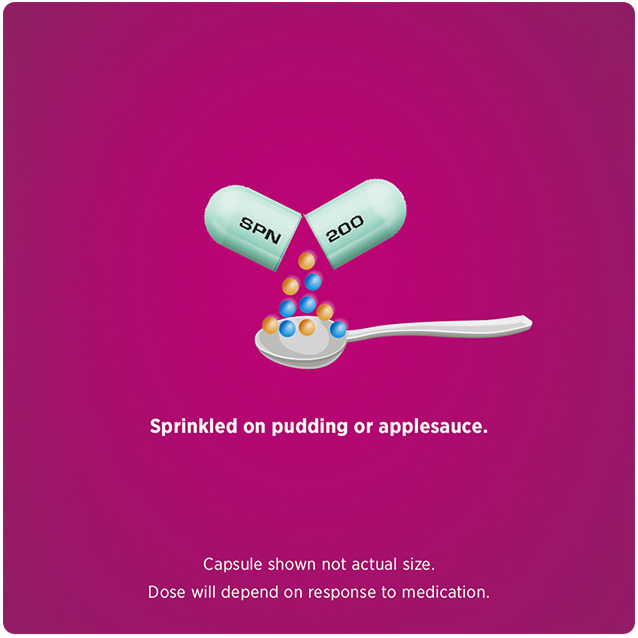
Qelbree can be taken by opening the capsule and sprinkling the beads onto a spoonful of applesauce or pudding.
Media Block Image
Qelbree can be taken by opening the capsule and sprinkling the beads onto a spoonful of applesauce or pudding.
Fifty Fifty Right

Qelbree can be sprinkled to help people unable to swallow capsules

Content Block Description

Qelbree is the only non-stimulant ADHD treatment that can be sprinkled. There are 2 ways to take Qelbree:

  1. Swallow the capsule whole
    Do not chew, cut, or crush the capsules. Can be taken with or without food.
  2. Sprinkle it on a spoonful of pudding or applesauce
    The capsule can be opened and its entire contents sprinkled onto a spoonful of applesauce or pudding.
Content Block Disclaimer

Once added to the applesauce, Qelbree should be all consumed, without chewing, within 2 hours. Once added to pudding, Qelbree should be all consumed, without chewing, within 15 minutes. Do not store for future use.

Text
Since Qelbree can be taken any time of day, this means I
can take my medication at night, which works best for my
routine.”
Jay Glazer
Author descriptor HTML

TV personality with ADHD
Paid spokesperson for Qelbree

Fifty Fifty Left
Media Block Image
Fifty Fifty Right

An effective treatment for ADHD

Content Block Description

See results from Qelbree medical studies for adults and children 6 years and older in treating ADHD.

Fifty Fifty Left

Interested in starting Qelbree?

Content Block Description
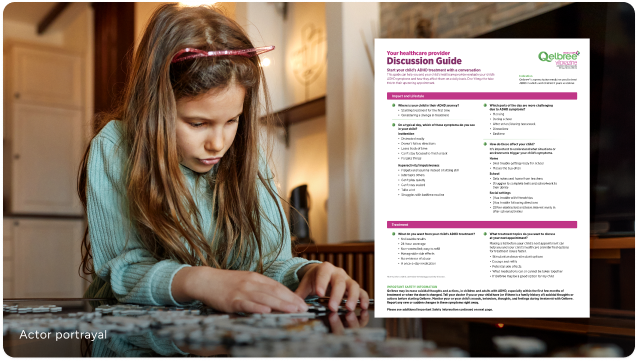
The first step is talking to your or your child's healthcare provider about your or your child’s needs and symptoms of ADHD. Get prepared with a free, personalized Discussion Guide.
Content Block CTA Button
Fifty Fifty Right
Media Block Image
IMPORTANT SAFETY INFORMATION ABOUT QELBREE

INDICATION

Qelbree® (viloxazine extended-release capsules) is a prescription medicine used to treat Attention-Deficit/Hyperactivity Disorder (ADHD) in adults and children 6 years and older.

IMPORTANT SAFETY INFORMATION
Qelbree may increase suicidal thoughts and actions, in children and adults with ADHD, especially within the first few months of treatment [read more] or when the dose is changed. Tell your doctor if you or your child have (or if there is a family history of) suicidal thoughts or actions before starting Qelbree. Monitor your or your child’s moods, behaviors, thoughts, and feelings during treatment with Qelbree. Report any new or sudden changes in these symptoms right away.

IMPORTANT SAFETY INFORMATION
Qelbree may increase suicidal thoughts and actions, in children and adults with ADHD, especially within the first few months of treatment or when the dose is changed. [read more] Tell your doctor if you or your child have (or if there is a family history of) suicidal thoughts or actions before starting Qelbree. Monitor your or your child’s moods, behaviors, thoughts, and feelings during treatment with Qelbree. Report any new or sudden changes in these symptoms right away.

You should not take Qelbree if you or your child:
Take a medicine for depression called a monoamine oxidase inhibitor (MAOI) or have stopped taking an MAOI in the past 14 days. Also, you or your child should avoid alosetron, duloxetine, ramelteon, tasimelteon, tizanidine, and theophylline.

Qelbree can increase blood pressure and heart rate. Your or your child’s doctor will monitor these vital signs.

Qelbree may cause manic episodes in patients with bipolar disorder. Tell your doctor if you or your child show any signs of mania.

Do not drive or operate heavy machinery until you know how Qelbree will affect you or your child. Qelbree may cause you or your child to feel sleepy or tired.

The most common side effects of Qelbree in patients 6 to 17 years are sleepiness, not feeling hungry, feeling tired, nausea, vomiting, trouble sleeping, and irritability, and in adults, insomnia, headache, sleepiness, tiredness, nausea, decreased appetite, dry mouth, and constipation. These are not all the possible side effects of Qelbree.

You are encouraged to report negative side effects of prescription drugs to the FDA. Visit www.fda.gov/medwatch or call 1-800-FDA-1088.

Please see Medication Guide, including Boxed Warning.

IMPORTANT SAFETY INFORMATION ABOUT QELBREE

INDICATION

Qelbree® (viloxazine extended-release capsules) is a prescription medicine used to treat Attention-Deficit/Hyperactivity Disorder (ADHD) in adults and children 6 years and older.

IMPORTANT SAFETY INFORMATION
Qelbree may increase suicidal thoughts and actions, in children and adults with ADHD, especially within the first few months of treatment [read more] or when the dose is changed. Tell your doctor if you or your child have (or if there is a family history of) suicidal thoughts or actions before starting Qelbree. Monitor your or your child’s moods, behaviors, thoughts, and feelings during treatment with Qelbree. Report any new or sudden changes in these symptoms right away.

IMPORTANT SAFETY INFORMATION
Qelbree may increase suicidal thoughts and actions, in children and adults with ADHD, especially within the first few months of treatment or when the dose is changed. [read more] Tell your doctor if you or your child have (or if there is a family history of) suicidal thoughts or actions before starting Qelbree. Monitor your or your child’s moods, behaviors, thoughts, and feelings during treatment with Qelbree. Report any new or sudden changes in these symptoms right away.

You should not take Qelbree if you or your child:
Take a medicine for depression called a monoamine oxidase inhibitor (MAOI) or have stopped taking an MAOI in the past 14 days. Also, you or your child should avoid alosetron, duloxetine, ramelteon, tasimelteon, tizanidine, and theophylline.

Qelbree can increase blood pressure and heart rate. Your or your child’s doctor will monitor these vital signs.

Qelbree may cause manic episodes in patients with bipolar disorder. Tell your doctor if you or your child show any signs of mania.

Do not drive or operate heavy machinery until you know how Qelbree will affect you or your child. Qelbree may cause you or your child to feel sleepy or tired.

The most common side effects of Qelbree in patients 6 to 17 years are sleepiness, not feeling hungry, feeling tired, nausea, vomiting, trouble sleeping, and irritability, and in adults, insomnia, headache, sleepiness, tiredness, nausea, decreased appetite, dry mouth, and constipation. These are not all the possible side effects of Qelbree.

You are encouraged to report negative side effects of prescription drugs to the FDA. Visit www.fda.gov/medwatch or call 1-800-FDA-1088.

Please see Medication Guide, including Boxed Warning.