
Real ADHD Stories
See the difference Qelbree is making in the lives of real people living with ADHD.

Download and print or save this number

Take your card to the pharmacy with your prescription and show it to your pharmacist.
To keep this card handy to share with your pharmacist, you may choose to screenshot it, download and print it, or add to your mobile wallet.


Have questions? Contact Supernus Support to speak to a rep about:
Reach us Monday-Friday, 8:30AM-6:30PM ET (excluding holidays)
Check your inbox for a confirmation email
Have questions? Contact Supernus Support to speak to a rep about:
Reach us Monday-Friday, 8:30AM-6:30PM ET (excluding holidays)
Take your Discussion Guide to your next appointment.
 Check your inbox

Qualified patients may pay as little as $20 per prescription.†
Find answers to common questions about Qelbree and ADHD.
Stay up to date on Qelbree and living with ADHD with Qelbree Insider.
If you have a young child or are planning to have a baby and breastfeed, it’s important to know certain information about your medications and to discuss options with your healthcare provider.
A medical study of 15 healthy lactating women receiving Qelbree (600 mg/day for 3 days) found the transfer of Qelbree into breast milk was low.*

Transfer of Qelbree into breast milk is low*
Get a free, personalized questionnaire to help inform your conversation.
Qualified patients may pay as little as $20 per prescription.†
Find answers to common questions about Qelbree and ADHD.
As a TV personality, Jay talks passionately about 2 things: football and living with ADHD. Jay shares his story of struggling with symptoms, getting diagnosed as an adult, and finding the right treatment with non-stimulant Qelbree.

This series explores the impact of ADHD on Jay and Rosie—and how Qelbree fits into Jay’s daily routine to help manage symptoms.





Jay and Rosie Glazer’s wedding day was nearly washed out by rain before a little faith and two beautiful rainbows saved the day. The moment serves as a metaphor for Jay’s life. He weathered a storm of inattention and impulsivity before getting diagnosed with ADHD in college, then struggled for many years to find both acceptance and a treatment that worked.
Yet with Rosie’s support and the start of treatment with Qelbree, those dark clouds soon cleared away.
As a TV personality and sports reporter, Jay needs to react quickly and calmly with the cameras rolling. He tried several stimulant therapies to manage his ADHD symptoms, but nothing clicked until non-stimulant Qelbree.
Once-a-day Qelbree is also a big win for Jay’s relationship with Rosie, helping him be more present, connected, and focused on what matters most.
Together, they advocate passionately for mental health and ADHD awareness, speaking openly about their story and encouraging others to do the same. The goal: Build one strong team that supports each other at every step of the ADHD journey.
Finding the right treatment can take time


After being diagnosed with ADHD and trying various treatment plans, David switched to Qelbree and found help managing his ADHD symptoms.

In elementary school, David would often stare out the window or doodle during class. In his teen years and in college, he'd zone out in the middle of conversations and be unable to focus on schoolwork even in quiet environments like the library.
After being diagnosed with ADHD in adulthood, David was hopeful about a regimen of medication and therapy. After initially taking another ADHD medication, he researched and came across Qelbree.
After discussing with his healthcare provider, David now manages his ADHD with Qelbree along with therapy and support from his community.
Hear how Qelbree helps manage David's ADHD symptoms today, and what improvements he's seen in his ADHD at work and at home.
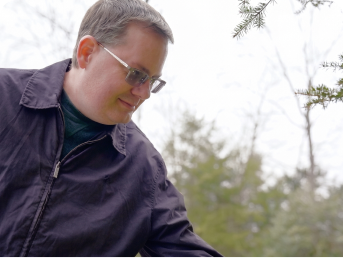

What I like about Qelbree is that it’s real convenient to take. I just take it once a day, and it doesn’t really matter what time of day.”
Before his ADHD diagnosis and Qelbree treatment, Eli was struggling. Now he and his mom Laura see real progress in his ADHD management.

As an elementary school student, Eli found himself struggling to keep up and became frustrated when he fell behind his classmates. Suspecting ADHD, Laura, his mom, and Eli sought treatment. He was diagnosed with ADHD by his healthcare provider and was prescribed Qelbree.
Four years later, Laura describes how Qelbree has helped Eli better manage his symptoms and slow down and process his thoughts and feelings rather than act out his frustrations and, in turn, allowing her to be less reactive.



The copay card was helpful for our family this year, bringing the cost of Eli’s medication down to $20 a month.”*
Megan struggled at work before her ADHD diagnosis. Now treated with Qelbree, she feels that managing her ADHD symptoms has helped her at work as a paralegal.

Megan was diagnosed with ADHD as an adult at 28. Her friend recalls how she watched Megan struggle with disorganization both professionally and personally, describing her as having “way too many thoughts in her head.”
Megan went to a psychiatrist and was diagnosed with ADHD. She was surprised by the diagnosis, not knowing that some of the behaviors she was exhibiting were symptoms.
After her psychiatrist prescribed her Qelbree and she began her treatment regimen, Megan was able to manage her ADHD symptoms with the help she needed as a busy litigation paralegal.

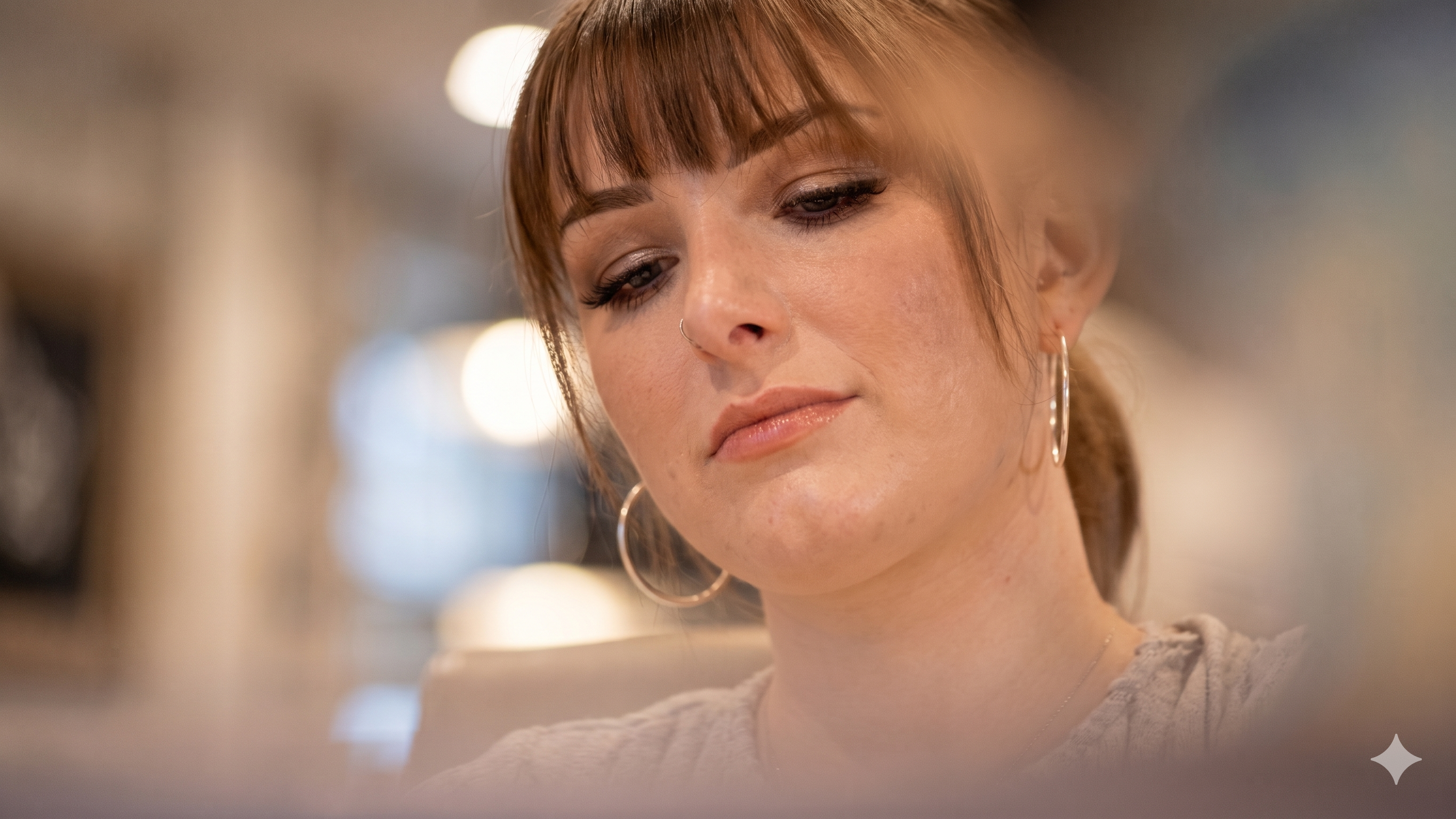
Qelbree has helped manage my ADHD symptoms.”
Michele realized during her son’s ADHD diagnosis that she had similar symptoms. After her own diagnosis and Qelbree, she feels it was a turning point.

As a child, Michele had difficulty in school and later experienced concentration and organization problems at work and in her role as a mom. Procrastinating on household tasks, she describes how the house was often in disarray: "I'd still have Christmas decorations, and it was August."
However, when Michele's son was diagnosed with ADHD at age 10, she realized that she may have the same condition.
After being diagnosed with ADHD by a psychiatrist, she was relieved to get a diagnosis, sad about her time spent struggling, and excited by the possibilities of treatment with Qelbree, which her son had taken to help manage his ADHD.
Hear why starting treatment was such a turning point for Michele.


Qelbree has helped me stay organized...and be motivated to do the tasks that I need to do as a mom to help my kids be successful.”
Qelbree® (viloxazine extended-release capsules) is a prescription medicine used to treat Attention-Deficit/Hyperactivity Disorder (ADHD) in adults and children 6 years and older.
IMPORTANT SAFETY INFORMATION
Qelbree may increase suicidal thoughts and actions, in children and adults with ADHD, especially within the first few months of treatment [read more] or when the dose is changed. Tell your doctor if you or your child have (or if there is a family history of) suicidal thoughts or actions before starting Qelbree. Monitor your or your child’s moods, behaviors, thoughts, and feelings during treatment with Qelbree. Report any new or sudden changes in these symptoms right away.
IMPORTANT SAFETY INFORMATION
Qelbree may increase suicidal thoughts and actions, in children and adults with ADHD, especially within the first few months of treatment or when the dose is changed. [read more] Tell your doctor if you or your child have (or if there is a family history of) suicidal thoughts or actions before starting Qelbree. Monitor your or your child’s moods, behaviors, thoughts, and feelings during treatment with Qelbree. Report any new or sudden changes in these symptoms right away.
You should not take Qelbree if you or your child:
Take a medicine for depression called a monoamine oxidase inhibitor (MAOI) or have stopped taking an MAOI in the past 14 days. Also, you or your child should avoid alosetron, duloxetine, ramelteon, tasimelteon, tizanidine, and theophylline.
Qelbree can increase blood pressure and heart rate. Your or your child’s doctor will monitor these vital signs.
Qelbree may cause manic episodes in patients with bipolar disorder. Tell your doctor if you or your child show any signs of mania.
Do not drive or operate heavy machinery until you know how Qelbree will affect you or your child. Qelbree may cause you or your child to feel sleepy or tired.
The most common side effects of Qelbree in patients 6 to 17 years are sleepiness, not feeling hungry, feeling tired, nausea, vomiting, trouble sleeping, and irritability, and in adults, insomnia, headache, sleepiness, tiredness, nausea, decreased appetite, dry mouth, and constipation. These are not all the possible side effects of Qelbree.
You are encouraged to report negative side effects of prescription drugs to the FDA. Visit www.fda.gov/medwatch or call 1-800-FDA-1088.
Please see Medication Guide, including Boxed Warning.
Qelbree® (viloxazine extended-release capsules) is a prescription medicine used to treat Attention-Deficit/Hyperactivity Disorder (ADHD) in adults and children 6 years and older.
IMPORTANT SAFETY INFORMATION
Qelbree may increase suicidal thoughts and actions, in children and adults with ADHD, especially within the first few months of treatment [read more] or when the dose is changed. Tell your doctor if you or your child have (or if there is a family history of) suicidal thoughts or actions before starting Qelbree. Monitor your or your child’s moods, behaviors, thoughts, and feelings during treatment with Qelbree. Report any new or sudden changes in these symptoms right away.
IMPORTANT SAFETY INFORMATION
Qelbree may increase suicidal thoughts and actions, in children and adults with ADHD, especially within the first few months of treatment or when the dose is changed. [read more] Tell your doctor if you or your child have (or if there is a family history of) suicidal thoughts or actions before starting Qelbree. Monitor your or your child’s moods, behaviors, thoughts, and feelings during treatment with Qelbree. Report any new or sudden changes in these symptoms right away.
You should not take Qelbree if you or your child:
Take a medicine for depression called a monoamine oxidase inhibitor (MAOI) or have stopped taking an MAOI in the past 14 days. Also, you or your child should avoid alosetron, duloxetine, ramelteon, tasimelteon, tizanidine, and theophylline.
Qelbree can increase blood pressure and heart rate. Your or your child’s doctor will monitor these vital signs.
Qelbree may cause manic episodes in patients with bipolar disorder. Tell your doctor if you or your child show any signs of mania.
Do not drive or operate heavy machinery until you know how Qelbree will affect you or your child. Qelbree may cause you or your child to feel sleepy or tired.
The most common side effects of Qelbree in patients 6 to 17 years are sleepiness, not feeling hungry, feeling tired, nausea, vomiting, trouble sleeping, and irritability, and in adults, insomnia, headache, sleepiness, tiredness, nausea, decreased appetite, dry mouth, and constipation. These are not all the possible side effects of Qelbree.
You are encouraged to report negative side effects of prescription drugs to the FDA. Visit www.fda.gov/medwatch or call 1-800-FDA-1088.
Please see Medication Guide, including Boxed Warning.
