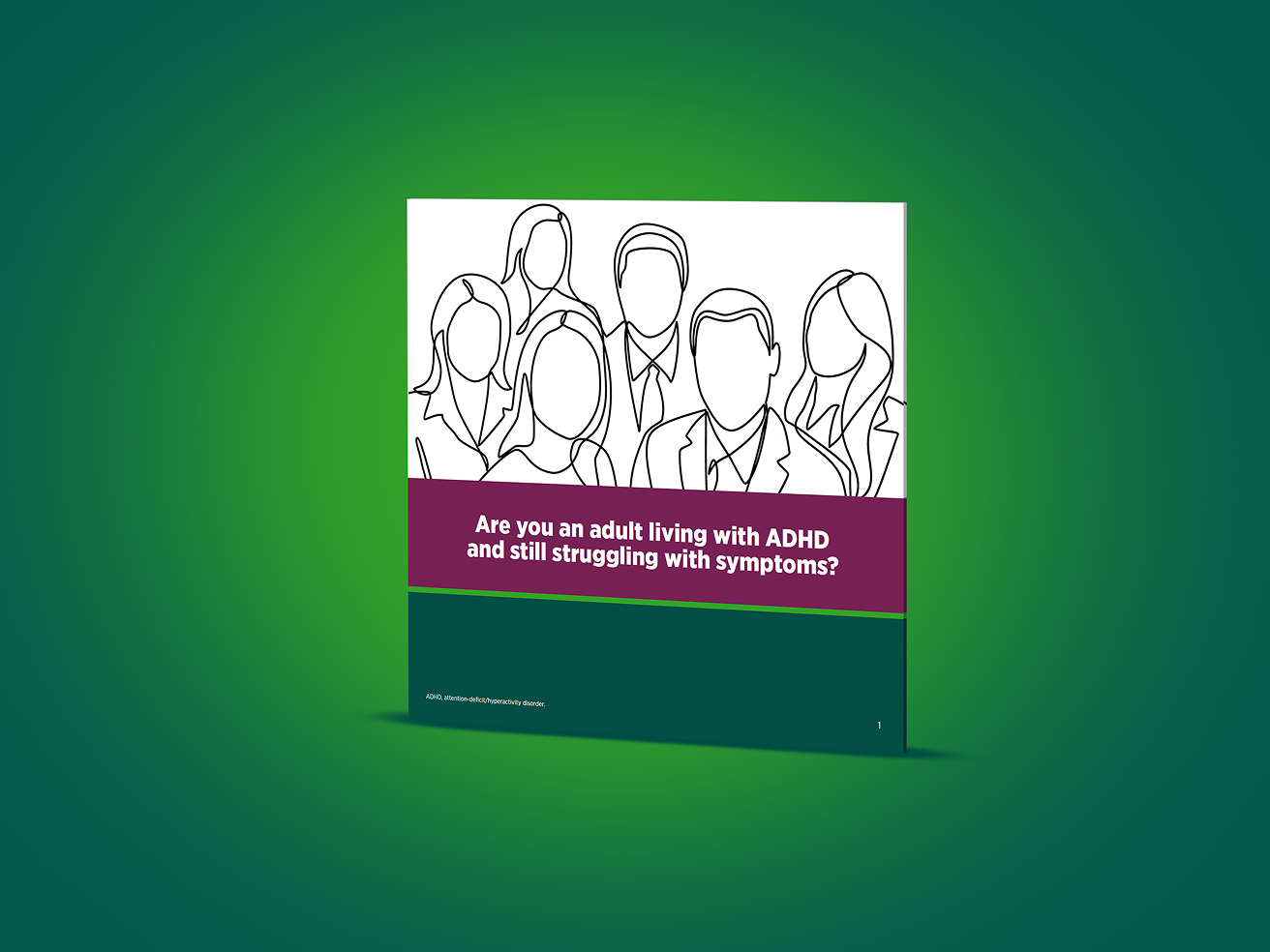
Signs and symptoms of ADHD in adulthood

Signs and symptoms of ADHD in adulthood

If you were diagnosed with ADHD as a child, your symptoms may look different now that you are an adult.

Decorative
Components
What are some common signs of ADHD in adults?
Feature List Description

ADHD in adults can look different from how it looks in children. Symptoms fall into several categories—inattentive, hyperactive-impulsive, and combined.

Feature List Items
Feature List Item Icon

Predominantly inattentive ADHD

Feature List Item Description
  • Often failing to give close attention to details, like making frequent errors at work
  • Trouble listening when spoken to
  • Often losing or forgetting important items, like your phone or keys
Feature List Item Icon

Predominantly hyperactive and impulsive ADHD

Feature List Item Description
  • Trouble staying seated or fidgeting
  • Feeling restless or always “on the go”
  • Interrupting others often
Speedbump Icon

Combined (inattentive/hyperactive-impulsive) ADHD

Speedbump Description
Symptoms may look like a combination of both types of ADHD. As with any diagnosis, the conversation should always start with your healthcare provider.

Adult ADHD is common

Stats Cards
~16 million

adults in the US are living with ADHD

~6% of adults

in the US are impacted by ADHD

Are you experiencing ADHD symptoms?
This symptom checklist is a quick tool to help reflect on your ADHD and discuss with your healthcare provider. See which of these common adult ADHD experiences may be relatable to you.
Testimonial Mobile Image
Testimonial Image

When I found out I had ADHD I kind of felt at ease. I finally know what’s going on, and it’s like okay, finally I can get some help here.”

David
Testimonial Author Description

Parent with ADHD
Paid spokesperson for Qelbree

How does gender affect ADHD?
Women and men may experience ADHD symptoms differently, and may exhibit different symptoms.

ADHD differences in girls and boys

ADHD differences in girls and boys

Decorative
Components

ADHD symptoms can look different in girls and boys

Content Block Description

ADHD affects kids and teens of all genders. That said, girls with ADHD are less likely to be diagnosed and treated in childhood. Unlike young boys, whose symptoms tend to fit the stereotypical idea of ADHD, young girls’ ADHD symptoms are often overlooked.

It’s important to know the different ways this condition can present, so you can better assess your child’s ADHD and help get them the support they need.

Fifty Fifty Left
Media Block Image
Fifty Fifty Right

Girls are more likely to:

Feature List Items
Feature List Item Icon
Suffer from inattentive symptoms (like daydreaming and trouble focusing)
Feature List Item Icon
Struggle with self-motivation and procrastination
Feature List Item Icon
Blame themselves for their symptoms
Talk to your daughter’s healthcare provider if you think she might be exhibiting symptoms of ADHD.
Speedbump Icon

Girls may be under-diagnosed

Speedbump Description
It’s less common for girls to receive an ADHD diagnosis or treatment.
Fifty Fifty Left

Boys are more likely to:

Feature List Items
Feature List Item Icon
Act out and be restless
Feature List Item Icon
Blame external factors for their symptoms
Feature List Item Icon
Suffer from hyperactivity and impulsivity
Talk to your son’s healthcare provider if you think he might be exhibiting symptoms of ADHD.
Fifty Fifty Right
Media Block Image
Testimonial Mobile Image
Eli
Testimonial Image

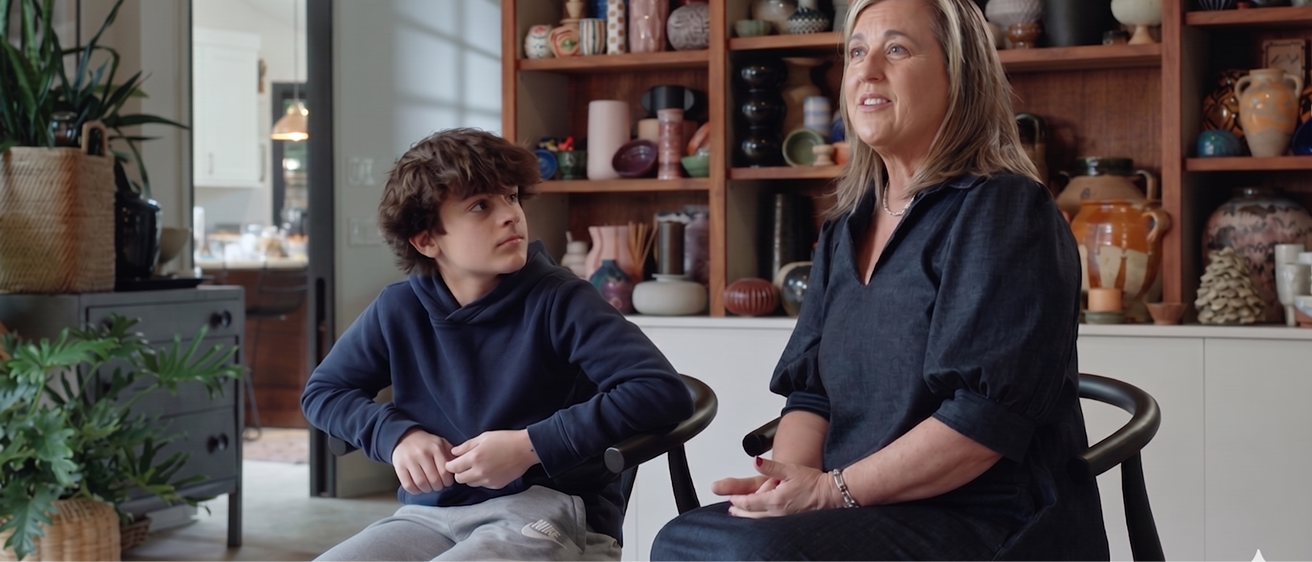
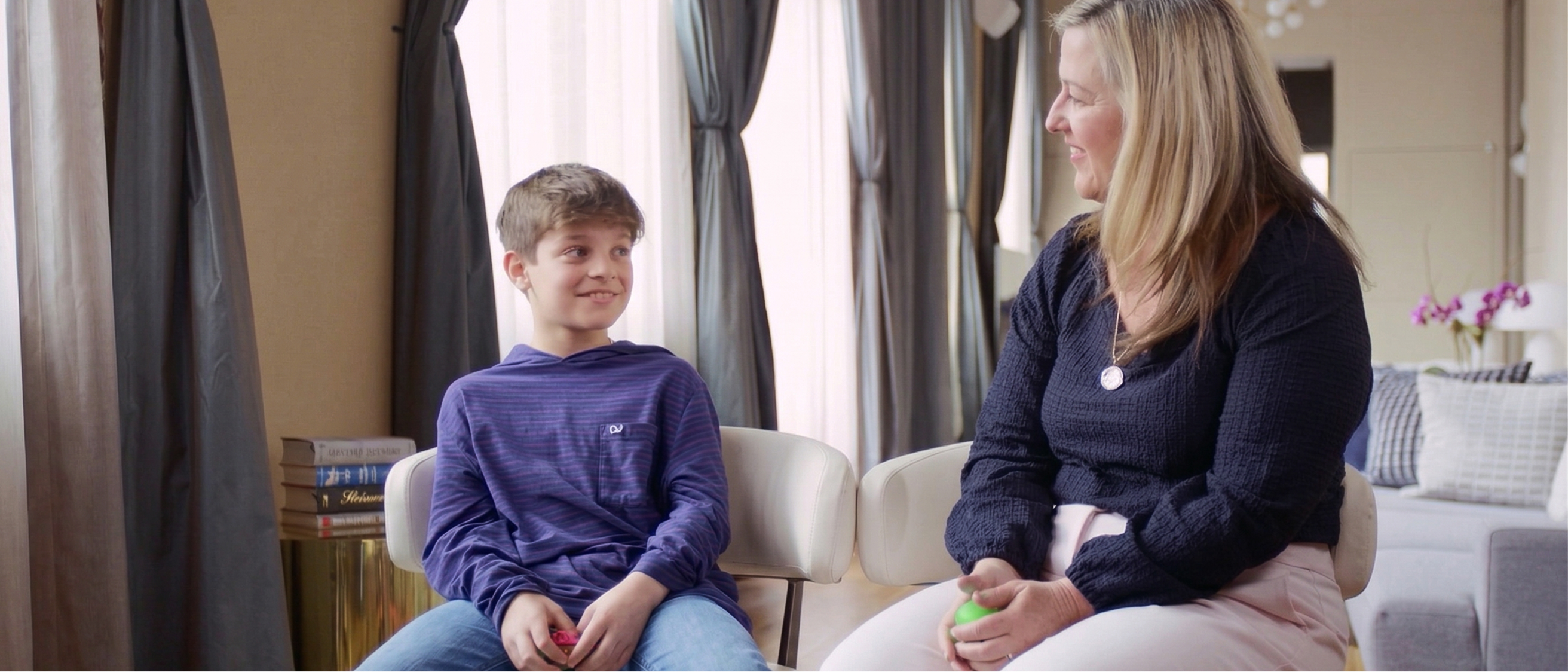
In the past there were too many things competing inside his head to be able to process what the teacher was saying. Now he is able to do that much better.”

Laura
Testimonial Author Description

Mother of son with ADHD
Paid spokesperson for Qelbree

Considering Qelbree for your child
Qelbree may be the right fit for effectively treating your child’s symptoms of ADHD.

ADHD symptoms in children and teens

ADHD symptoms in children and teens

ADHD can affect kids and teens in different ways. Learn what signs and symptoms to look for, and how to help support your child.

Decorative
Fifty Fifty Left
Media Block Image
Fifty Fifty Right

ADHD symptoms can be different for each child

Content Block Description

While the 3 general symptoms of ADHD involve inattention, hyperactivity, and impulsivity, children and teens may show stronger signs in one area over the others.

Some children may be more likely to daydream or procrastinate. Others may be hyperactive and restless.

Components

ADHD and school


School can present many challenges for children and teens with ADHD. Luckily, with the right awareness and symptom support, you can help better address your child's needs.

Signs of ADHD in students: what to look for

Feature List Description

Symptoms can show up differently depending on a student’s age, gender, and school environment.

Feature List Items
Feature List Item Icon
Grade school
Feature List Item Description

Problems with paying attention and/or behaving in class can become more apparent. This can differ slightly by gender. For example, young boys are often more likely to act out in class than young girls.

As more official grading systems are introduced, students with unmanaged ADHD may struggle to perform to their ability.


Feature List Item Icon
High school
Feature List Item Description

Teens with ADHD will often show less hyperactivity than in early school years, but may struggle more with inattention and impulsivity.

This can cause “high-achieving” ADHD students to struggle with frequent procrastination, late study nights, and feeling overwhelmed while still getting good grades.

On the flip side, students with ADHD who aren’t performing to their ability may lean further into a “don’t care” mentality, and struggle to invest in their academics.

Ways to support your child with ADHD in school

Feature List Description

Here are several practical strategies you can use to help support your child with ADHD throughout their school years.

Feature List Items
Feature List Item Icon
Work with their teachers
Feature List Item Description

It’s good to practice open communication with your child’s teacher, school nurse, or other staff about their symptoms and possible accommodations.

Feature List Item Icon
Ask about classroom accommodations
Feature List Item Description

For example: a student with ADHD may benefit from sitting close to the teacher and away from doors and windows. You can also talk to their teacher(s) about breaking down larger projects and deadlines into more digestible segments and check-ins.

Feature List Item Icon
Help them stay on top of medication
Feature List Item Description

Build a sustainable medication routine and help them stick to it. Check in with them on their symptom progress, or if they’re experiencing any side effects, in case it’s time to reevaluate their treatment plan with their doctor.

Feature List Item Icon
Consider behavior therapy
Feature List Item Description

Studies show that including behavior therapy as part of your child’s ADHD treatment plan—in conjunction with medication—could have notable benefits.

Testimonial Mobile Image
Laura and Eli
Testimonial Image

We've gained a lot of perspective over the last four years. We have a lot of things that we can do to make it better for us both individually and as a family.”

Laura
Testimonial Author Description

Mother of son with ADHD
Paid spokesperson for Qelbree

Addressing ADHD

If you think your child may be experiencing symptoms of ADHD, there are steps you can take to begin addressing it.

Understanding ADHD

Understanding ADHD

ADHD is a complex disorder and can look different from person to person.

Actor portrayals

Decorative

What is ADHD?

ADHD (attention-deficit/hyperactivity disorder) is a neurodevelopmental disorder, or a condition that affects how your brain grows and changes throughout your life.


What symptoms are associated with ADHD?

ADHD is characterized by an ongoing pattern of 1 or more of the following types of symptoms:

Multiple Card Cards
Single Card Icon or Image

Inattention

Difficulty paying attention, keeping on task, or staying organized
Single Card Icon or Image

Hyperactivity

Often moving around (including during inappropriate times), restlessness, or talking excessively
Single Card Icon or Image

Impulsivity

Interrupting, intruding on others, or having trouble waiting one’s turn

The examples provided are not inclusive of all of the symptoms of ADHD. Only a healthcare professional can diagnose ADHD.

Fifty Fifty Left
Media Block Image
Fifty Fifty Right

Several brain chemicals are believed to play a role in ADHD

Content Block Description

ADHD is understood to be an imbalance of some of the chemical messengers in the brain. These chemical messengers carry signals to help the brain and body communicate and regulate various functions. Norepinephrine and serotonin are two interconnected chemical messenger systems that play a role in ADHD symptoms.

ADHD symptoms can look different based on the person

Not everyone with ADHD experiences all of the symptoms, or in the same way. Some people struggle more with inattention, while others struggle more with hyperactivity and impulsivity.

Testimonial Mobile Image
Sam
Testimonial Image
Man in park waling

If I had only been diagnosed earlier, how much of my life would be different now?”

Sam
Testimonial Author Description

Adult with ADHD
Paid spokesperson for Qelbree and employee of Supernus

Testimonial CTA Button
Familiarize yourself with symptoms of ADHD
Knowing the range of symptoms that are associated with ADHD can be the first step in managing it.

Tips for your child’s success

Tips for your child’s success

To make sure your child is getting the best results with Qelbree, it's important that they take their medication as prescribed. Here you’ll find some ideas to help them stay on track.

Decorative
Components

Medication-related tips

Feature List Items
Feature List Item Icon
Qelbree can be taken any time of day
Feature List Item Description
Choose a time that works best for your child.
Feature List Item Icon
What should I do if I miss a dose?
Feature List Item Description
If your child misses their regularly scheduled dose, they may not have to skip the day. Talk to your healthcare provider about what to do.
Feature List Item Icon
Set a once-daily treatment reminder or help your child set one
Feature List Item Description
That’s one less thing to remember, and one less decision to make.
Feature List Item Icon
Try storing their medication in the same place
Feature List Item Description
It’s hard to take their medication when they can’t find their medication.
Feature List Item Icon
Consider buying a pill organizer
Feature List Item Description
It’ll help avoid the “Wait, did I take my meds today?”
Speedbump Icon

Try 90-day refills for convenience

Speedbump Description

Qelbree is a non-stimulant medication and can be refilled without needing a new prescription each month. Switch to 90-day refills for convenience.

Other tips

Feature List Items
Feature List Item Icon
Aim for progress, not perfection, along the way
Feature List Item Description
Remember, ADHD management is a journey. Give your child and yourself patience as you adjust to the routine together.
Feature List Item Icon
Consider including your child in treatment discussions and decisions
Feature List Item Description
This can make them more comfortable with their ADHD treatment plan. You can ask them if their treatment is helping or if they are experiencing any side effects. Talk to them to see what symptoms continue to affect them.
Feature List Item Icon
Tracking symptoms and talking to your child’s healthcare provider is part of this journey
Feature List Item Description
Don’t hesitate to be open and honest about your child’s treatment progress so they can best help. Communication is key to making things better for everyone.
Feature List Item Icon
Treatment breaks may not be right for your child
Feature List Item Description
Some parents may consider giving their child a planned break from ADHD treatment. Know that this could lead to a return of ADHD symptoms and have other negative effects. If you’re considering a break, have a conversation with your child’s healthcare provider beforehand.
Speedbump Icon

Navigating ADHD is a team effort

Speedbump Description
You and your child aren’t alone, so don’t hesitate to ask for help. You will find your child’s healthcare provider, school, and community can help you and your child on their ADHD journey.
Multiple Card Cards
Single Card Icon or Image

Join Qelbree Insider

Sign up and get information about Qelbree and managing ADHD.
Single Card CTA Button
Single Card Icon or Image

Resources

Find more resources to help support you and your child with ADHD.
Single Card CTA Button
Single Card Icon or Image

Get the Qelbree Savings Card

Qualified patients may pay as little as $20 per prescription.*
Single Card CTA Button

Pediatric starting doses and what to expect

Pediatric starting doses and what to expect

Children and teens build up to the right dose of Qelbree in as soon as 1-3 weeks. Dosing is a journey, stick with it!

Decorative
Components
Building to an effective dose
Content Block Description

The dose of Qelbree may be adjusted weekly as needed to optimize ADHD symptom control.*

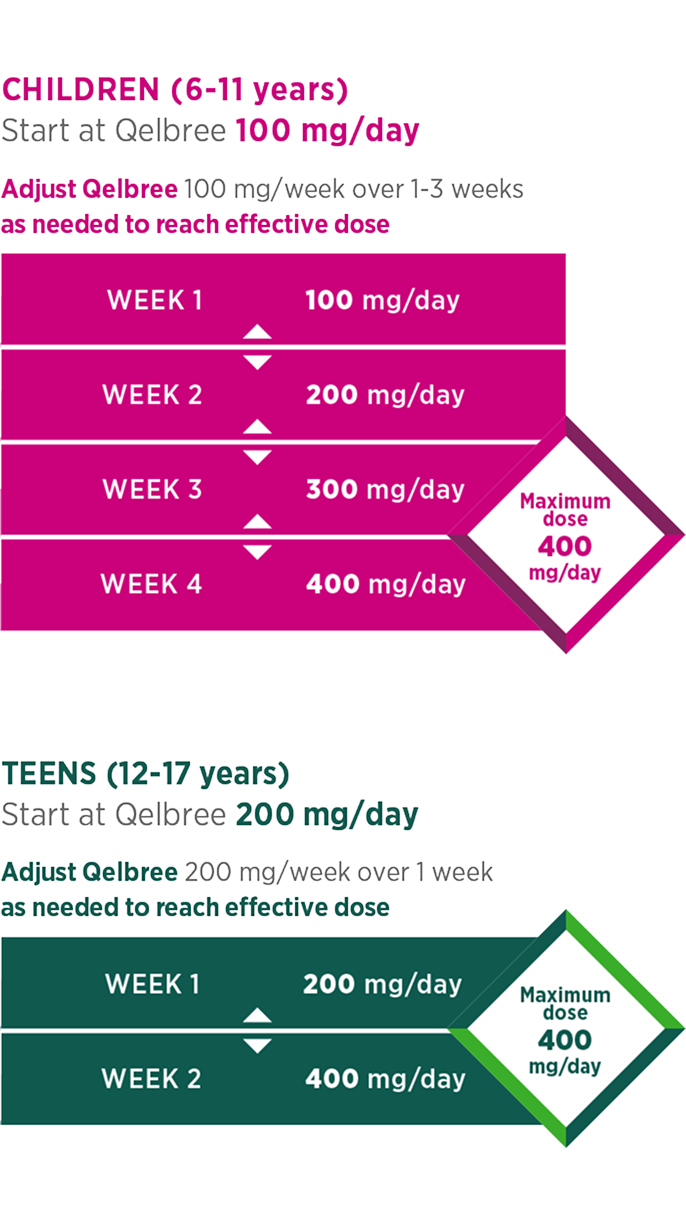
Your healthcare provider will typically start your child on a lower dose and increase it gradually over the first 1-3 weeks until they reach the dose that’s right for them, adjusting as needed.

This could be anywhere from 100 mg to 400 mg per day for children and teens. This process is called titration.

*Your child’s healthcare provider will determine the dose based on your child’s response to medication.

Qelbree's titration schedule for children ages 6 to 11 starts at 100 mg/day and increases weekly up to a maximum of 400 mg/day. For teens ages 12 to 17, dosages start at 200 mg/day and increases to 400 mg/day. by week 4.
When to expect results
Feature List Description
It’s important to know:
Feature List Items
Feature List Item Icon
Feature List Item Description

Qelbree is a non-stimulant medication and has a “gradual onset.” It could take a few weeks for the medication to be fully effective.

Feature List Item Icon
Feature List Item Description

Qelbree provides a foundation of 24-hour coverage—avoiding peaks and crashes commonly experienced with most stimulant medications.

Speedbump Description

Qelbree is proven to work in medical studies that were conducted over 6 or 8 weeks—showing significant reduction in ADHD symptom scores in 4 medical studies of more than 1400 people.

Qelbree met the goal in the pediatric medical studies—a significant reduction in ADHD symptom scores in 6 or 8 weeks. Qelbree reduced ADHD symptom scores as early as Week 1 for some children.

Taking a week-by-week approach can help your child starting Qelbree
Content Block Description
Managing your child’s ADHD is a journey. Here are some things you can do each week to help with their Qelbree experience when starting out.
Tasks for the first 3 weeks of treatment

It is important to keep all follow-up visits with your child’s healthcare provider and to monitor mood or behavior changes as well as any other side effects while they are taking Qelbree.

Fifty Fifty Left
Mobile Image
Media Block Image
Fifty Fifty Right
Stick with it!
Content Block Description

Like many ADHD medications, reaching your child’s best daily dose of Qelbree may take some time. Make sure they stick with their treatment, and check in with your child and their healthcare provider about their progress.

If your child is still struggling with symptoms, or starts experiencing side effects, let their healthcare provider know. Sometimes, even small adjustments to their treatment dose can make a big difference.

Use the Qelbree Progress Tracker to help keep track of your experience as you find the right dose of Qelbree.

Testimonial Mobile Image
Testimonial Image

Qelbree has helped us have a reset button where Eli is able to stop and process and think things through.”

Laura
Testimonial Author Description

Mother of son with ADHD
Paid spokesperson for Qelbree

Is your child switching from another ADHD treatment? It’s common.

Your child’s healthcare provider will advise on what their individualized treatment plan looks like.

Children, teens, and adults who were prescribed Qelbree came from:
Stats Cards
49%
Stats Card Footnote HTML

switched to Qelbree from a controlled substance or stimulant medication

51%
Stats Card Footnote HTML

switched to Qelbree from other non‑stimulant ADHD meds

CTA Card Icon
More tips for success
You’ve got this. Find more tips for success when starting your child on Qelbree.

Starting your child on Qelbree

Starting your child on Qelbree

Learn what to expect when starting your child on non-stimulant once-a-day Qelbree and why it may be the right treatment option for them.

Decorative
Components
Qelbree may fit your child’s routine, whatever that looks like for them
Feature List Items
Feature List Item Icon
Once-a-day dosing
Feature List Item Description
Qelbree is a once-a-day non-stimulant medication for children aged 6-17 years with ADHD.
Feature List Item Icon
Full-day coverage
Feature List Item Description
Each Qelbree capsule contains a combination of rapid- and extended-release medication and provides medication coverage through the day.
Feature List Item Icon
Can be taken any time of day
Feature List Item Description
If your child misses their regularly scheduled dose, they may not have to skip the day. Talk to your healthcare provider about what to do.
Feature List Item Icon
Can be taken with or without food
Feature List Item Description
The Qelbree capsule can be swallowed whole, or the capsule can be opened and its entire contents sprinkled onto a spoonful of applesauce or pudding.* Do not cut, crush, or chew the capsules.
Feature List Footnote
*Once added to the applesauce, Qelbree should be all consumed, without chewing, within two hours. Once added to pudding, Qelbree should be all consumed, without chewing, within 15 minutes. Do not store for future use.
Speedbump Icon

Convenient refills, including telehealth

Speedbump Description
Qelbree is a non-stimulant and can be prescribed by a healthcare provider—even via telehealth—without the need for new prescriptions each month for refills.

3 strengths offer tailored dosing for your child

Image
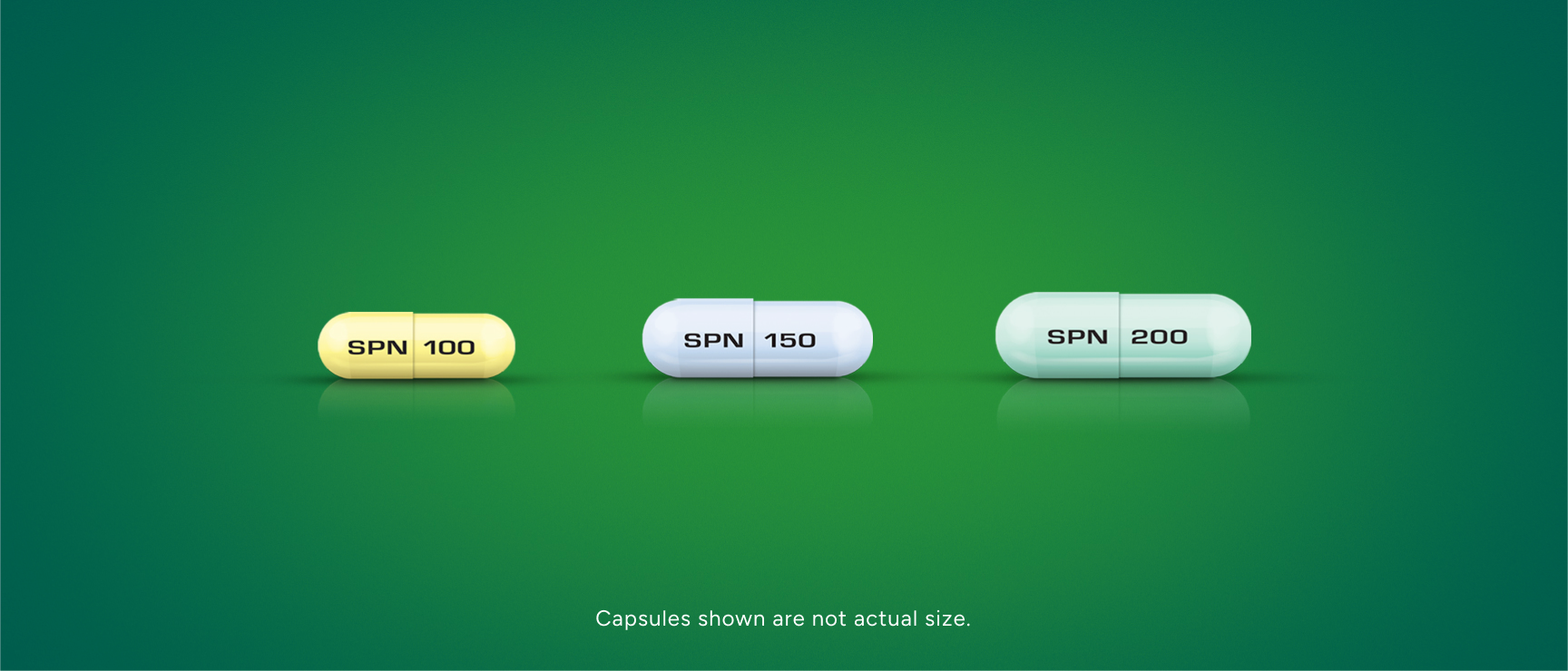
Qelbree comes in three strength options with three capsule sizes: "SPN 100," "SPN 150," and "SPN 200."
  • For children 6-11 years old: The recommended starting dose is 100 mg once daily
  • For children 12-17 years old: The recommended starting dose is 200 mg once daily
  • The maximum recommended dosage for children 6-17 years old is 400 mg once daily

Your child’s doctor may gradually increase their dose over 1-3 weeks until they reach the dose that’s right for them. This process is called titration.

Fifty Fifty Left
Media Block Image
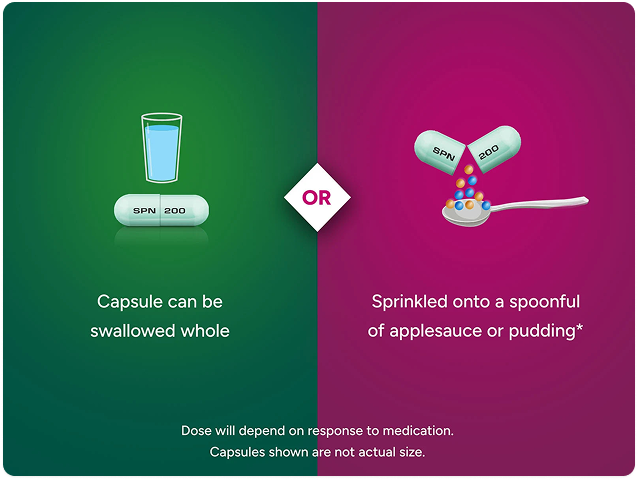
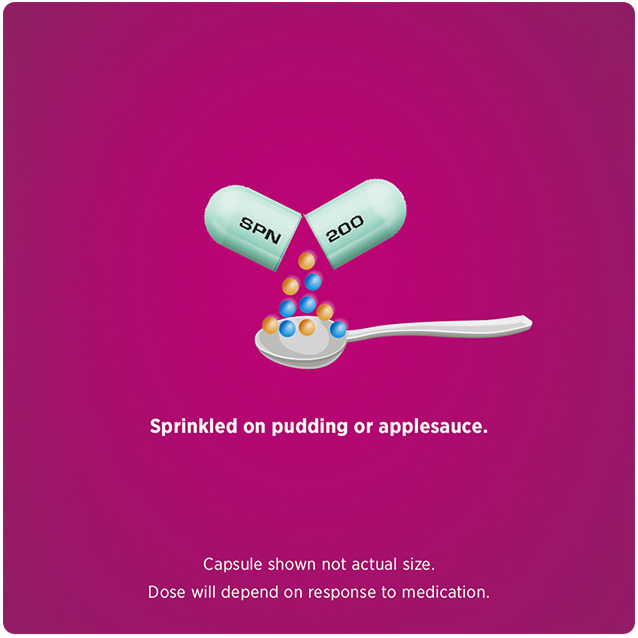
You can take Qelbree in two ways: swallowing the capsule whole with a glass of water or opening the capsule and sprinkling the beads onto a spoonful of applesauce or pudding.
Fifty Fifty Right
2 ways to take Qelbree
Content Block Description

The Qelbree capsule can be swallowed whole, or the capsule can be opened and its entire contents sprinkled onto a spoonful of applesauce or pudding.* Do not cut, crush, or chew the capsules.

Qelbree is the only non-stimulant ADHD treatment that can be sprinkled for easier dosing for patients who are unable to swallow capsules.

Content Block Disclaimer
*Once added to applesauce, Qelbree should be all consumed, without chewing, within 2 hours. Once added to pudding, Qelbree should be all consumed, without chewing, within 15 minutes. Do not store for future use.
CTA Card Icon
When can you expect results?
Your child may find the right dose of Qelbree in 1-3 weeks. Qelbree is a non-stimulant medication and builds gradually in the body, which can take time.
Testimonial Mobile Image
Testimonial Image

Our pediatrician will write the prescription for the whole year, and we just refill it monthly.”

Laura
Testimonial Author Description

Mother of son with ADHD
Paid spokesperson for Qelbree

Results with Qelbree in Children

Results with Qelbree

Qelbree pediatric medical study results.

Decorative
Components

Qelbree was proven to significantly reduce ADHD symptoms in children and teens in 3 medical studies

Feature List Description
In medical studies, Qelbree—a non-stimulant—was proven to help effectively manage ADHD symptoms compared to placebo at the end of the studies.
Feature List Items
Feature List Item Icon

Qelbree met the goal of 3 different medical studies: a significant reduction in ADHD symptom scores in 6 or 8 weeks, depending on the study. For some children, Qelbree reduced ADHD symptom scores as early as Week 1.

Feature List Item Icon

Your child’s healthcare provider can recommend Qelbree as part of a total treatment program that may include counseling and support therapies.

Speedbump Icon

Rapid and extended release and full-day coverage

Speedbump Description
Qelbree uses 2-bead Microtrol® Technology for rapid and extended release and provides medication coverage throughout the day.

Medical study results

Feature List Description

How we ran the studies: Qelbree was studied in 3 medical studies involving boys and girls ages 6-17 years who had been diagnosed with ADHD. The studies measured what kind of changes in ADHD symptoms these children experienced over the course of the 6- or 8-week medical studies. They measured the frequency and severity of ADHD symptoms, including inattention, hyperactivity, and impulsivity.

Qelbree showed significant reduction in symptoms compared to placebo

Feature List Items
Feature List Item Icon
Feature List Item Description

Qelbree was proven to be effective and safe* in 3 medical studies in over 800 patients with a once-a-day convenient dose.

Feature List Footnote
*Important: Those taking Qelbree should be monitored for mood or behavior changes. The healthcare provider should also monitor for changes in blood pressure and heart rate.
Fifty Fifty Left
Media Block Image
Fifty Fifty Right

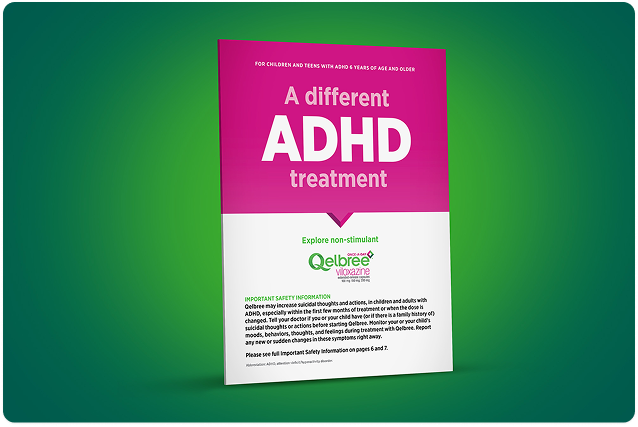
Download the Qelbree brochure

Content Block Description

It’s an easy-to-reference source for:

  • Key treatment information on Qelbree
  • Helpful tips for managing your child's ADHD
Content Block CTA Button
Fifty Fifty Left

Safety and side effects

Content Block Description
See safety information and learn about possible side effects of Qelbree from medical studies.
Content Block CTA Button
Fifty Fifty Right
Media Block Image

What is Qelbree?

About Qelbree

Qelbree is an effective, safe,* and convenient once-a-day, non-stimulant ADHD medication for adults and kids ages 
6 years and older.

*Important: Those taking Qelbree should be monitored for mood or behavior changes. The healthcare provider should also monitor for changes in blood pressure and heart rate.
Decorative

ADHD management with Qelbree

Maintaining regular treatment with Qelbree, as directed, may lead to ADHD symptom control.

Multiple Card Cards
Single Card Icon or Image

Full-day coverage

Qelbree uses 2-bead Microtrol® Technology for rapid and extended release, and provides medication coverage throughout the day.
Single Card Icon or Image

Flexible treatment schedule

Qelbree is taken once a day to treat ADHD symptoms.
Single Card Icon or Image

Convenient refills

Qelbree is a non-stimulant. You may not need a new prescription each month to refill Qelbree.
Stats Cards
3 million

prescriptions and counting

Stats Card Footnote HTML

In over 5 years, 3 million prescriptions have been filled for Qelbree.
Pediatric indication approved in 2021.

See the results
In medical studies, Qelbree was proven to significantly reduce ADHD symptoms vs placebo at the end of the studies.
Testimonial Mobile Image
Testimonial Image

ADHD doesn’t have to control your life. It can be managed.”

Megan
Testimonial Author Description

Adult with ADHD

Paid spokesperson for Qelbree

A non-stimulant approach

Qelbree is a non-stimulant medication and has a “gradual onset.” It could take a few weeks for the medication to be fully effective.

Benefits of Non-stimulant Qelbree

Benefits of non-stimulant Qelbree

Decorative
Components
Qelbree is a non-stimulant medication and:
Feature List Items
Feature List Item Icon
Has no evidence of abuse or misuse
Feature List Item Icon
Is proven to be safe,* with manageable side effects when taken as directed
Feature List Item Icon
Is unlikely to have negative interactions with methylphenidate and amphetamine stimulant formulations
Content Block Description


Talk to your healthcare provider about all medications being taken, and to see if Qelbree could be the right fit.

*Important: Those taking Qelbree should be monitored for mood or behavior changes. The healthcare provider should also monitor for changes in blood pressure and heart rate.

Speedbump Icon

Convenient refills, including via telehealth

Speedbump Description
Qelbree is a non-stimulant and can be prescribed by a healthcare provider—even via telehealth—without the need for new prescriptions each month for refills.
Text
My patients really get interested in the fact that this is not
a stimulant and that it is not addictive and can last through
the evening.”
Frank Lopez, MD
Components
Qelbree offers up to 24 hours of medication coverage
Feature List Items
Feature List Item Icon
Qelbree has a gradual onset.
Feature List Item Icon
Qelbree contains rapid- and extended-release formulations taken once daily, and provides all-day medication coverage.
Flexible dosing to meet your routine
Feature List Items
Feature List Item Icon
The convenience of once-a-day dosing
Feature List Item Description
Because Qelbree offers full-day coverage, it only needs to be taken once each day.
Feature List Item Icon
Choose when you take it
Feature List Item Description
Take Qelbree once a day, either day or night, whichever works best for you.
Feature List Item Icon
Qelbree can be taken without regard to mealtimes
Feature List Item Description
Take Qelbree with a meal or on an empty stomach.
Speedbump Headline HTML
Qelbree has over 5 years of experience treating ADHD
Speedbump Description

Half a million patients have been prescribed Qelbree for their ADHD.
Pediatric indication approved in 2021.

Fifty Fifty Left
Mobile Image
Qelbree can be taken by opening the capsule and sprinkling the beads onto a spoonful of applesauce or pudding.
Media Block Image
Qelbree can be taken by opening the capsule and sprinkling the beads onto a spoonful of applesauce or pudding.
Fifty Fifty Right

Qelbree can be sprinkled to help people unable to swallow capsules

Content Block Description

Qelbree is the only non-stimulant ADHD treatment that can be sprinkled. There are 2 ways to take Qelbree:

  1. Swallow the capsule whole
    Do not chew, cut, or crush the capsules. Can be taken with or without food.
  2. Sprinkle it on a spoonful of pudding or applesauce
    The capsule can be opened and its entire contents sprinkled onto a spoonful of applesauce or pudding.
Content Block Disclaimer

Once added to the applesauce, Qelbree should be all consumed, without chewing, within 2 hours. Once added to pudding, Qelbree should be all consumed, without chewing, within 15 minutes. Do not store for future use.

Text
Since Qelbree can be taken any time of day, this means I
can take my medication at night, which works best for my
routine.”
Jay Glazer
Author descriptor HTML

TV personality with ADHD
Paid spokesperson for Qelbree

Fifty Fifty Left
Media Block Image
Fifty Fifty Right

An effective treatment for ADHD

Content Block Description

See results from Qelbree medical studies for adults and children 6 years and older in treating ADHD.

Fifty Fifty Left

Interested in starting Qelbree?

Content Block Description
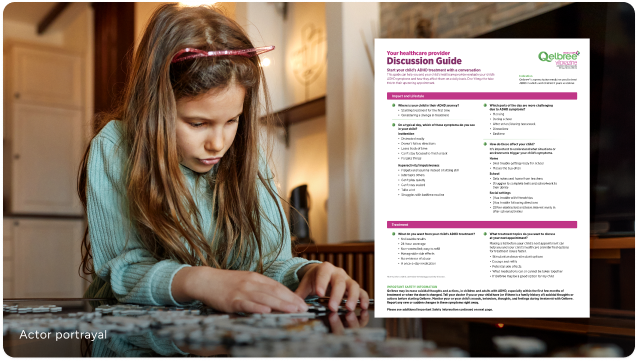
The first step is talking to your or your child's healthcare provider about your or your child’s needs and symptoms of ADHD. Get prepared with a free, personalized Discussion Guide.
Content Block CTA Button
Fifty Fifty Right
Media Block Image

IMPORTANT SAFETY INFORMATION ABOUT QELBREE

INDICATION

Qelbree® (viloxazine extended-release capsules) is a prescription medicine used to treat Attention-Deficit/Hyperactivity Disorder (ADHD) in adults and children 6 years and older.

IMPORTANT SAFETY INFORMATION
Qelbree may increase suicidal thoughts and actions, in children and adults with ADHD, especially within the first few months of treatment [read more] or when the dose is changed. Tell your doctor if you or your child have (or if there is a family history of) suicidal thoughts or actions before starting Qelbree. Monitor your or your child’s moods, behaviors, thoughts, and feelings during treatment with Qelbree. Report any new or sudden changes in these symptoms right away.

IMPORTANT SAFETY INFORMATION
Qelbree may increase suicidal thoughts and actions, in children and adults with ADHD, especially within the first few months of treatment or when the dose is changed. [read more] Tell your doctor if you or your child have (or if there is a family history of) suicidal thoughts or actions before starting Qelbree. Monitor your or your child’s moods, behaviors, thoughts, and feelings during treatment with Qelbree. Report any new or sudden changes in these symptoms right away.

You should not take Qelbree if you or your child:
Take a medicine for depression called a monoamine oxidase inhibitor (MAOI) or have stopped taking an MAOI in the past 14 days. Also, you or your child should avoid alosetron, duloxetine, ramelteon, tasimelteon, tizanidine, and theophylline.

Qelbree can increase blood pressure and heart rate. Your or your child’s doctor will monitor these vital signs.

Qelbree may cause manic episodes in patients with bipolar disorder. Tell your doctor if you or your child show any signs of mania.

Do not drive or operate heavy machinery until you know how Qelbree will affect you or your child. Qelbree may cause you or your child to feel sleepy or tired.

The most common side effects of Qelbree in patients 6 to 17 years are sleepiness, not feeling hungry, feeling tired, nausea, vomiting, trouble sleeping, and irritability, and in adults, insomnia, headache, sleepiness, tiredness, nausea, decreased appetite, dry mouth, and constipation. These are not all the possible side effects of Qelbree.

You are encouraged to report negative side effects of prescription drugs to the FDA. Visit www.fda.gov/medwatch or call 1-800-FDA-1088.

Please see Medication Guide, including Boxed Warning.

IMPORTANT SAFETY INFORMATION ABOUT QELBREE

INDICATION

Qelbree® (viloxazine extended-release capsules) is a prescription medicine used to treat Attention-Deficit/Hyperactivity Disorder (ADHD) in adults and children 6 years and older.

IMPORTANT SAFETY INFORMATION
Qelbree may increase suicidal thoughts and actions, in children and adults with ADHD, especially within the first few months of treatment [read more] or when the dose is changed. Tell your doctor if you or your child have (or if there is a family history of) suicidal thoughts or actions before starting Qelbree. Monitor your or your child’s moods, behaviors, thoughts, and feelings during treatment with Qelbree. Report any new or sudden changes in these symptoms right away.

IMPORTANT SAFETY INFORMATION
Qelbree may increase suicidal thoughts and actions, in children and adults with ADHD, especially within the first few months of treatment or when the dose is changed. [read more] Tell your doctor if you or your child have (or if there is a family history of) suicidal thoughts or actions before starting Qelbree. Monitor your or your child’s moods, behaviors, thoughts, and feelings during treatment with Qelbree. Report any new or sudden changes in these symptoms right away.

You should not take Qelbree if you or your child:
Take a medicine for depression called a monoamine oxidase inhibitor (MAOI) or have stopped taking an MAOI in the past 14 days. Also, you or your child should avoid alosetron, duloxetine, ramelteon, tasimelteon, tizanidine, and theophylline.

Qelbree can increase blood pressure and heart rate. Your or your child’s doctor will monitor these vital signs.

Qelbree may cause manic episodes in patients with bipolar disorder. Tell your doctor if you or your child show any signs of mania.

Do not drive or operate heavy machinery until you know how Qelbree will affect you or your child. Qelbree may cause you or your child to feel sleepy or tired.

The most common side effects of Qelbree in patients 6 to 17 years are sleepiness, not feeling hungry, feeling tired, nausea, vomiting, trouble sleeping, and irritability, and in adults, insomnia, headache, sleepiness, tiredness, nausea, decreased appetite, dry mouth, and constipation. These are not all the possible side effects of Qelbree.

You are encouraged to report negative side effects of prescription drugs to the FDA. Visit www.fda.gov/medwatch or call 1-800-FDA-1088.

Please see Medication Guide, including Boxed Warning.